| Impact | Transformed the media landscape |
| Emergence | 1970s |
| Advantages | 3D viewing experience |
| Technology | Holographic television |
| Limitations | Technical constraints |
| Current status | Common in homes and public spaces |
| Future development | Continues to shape visual media |
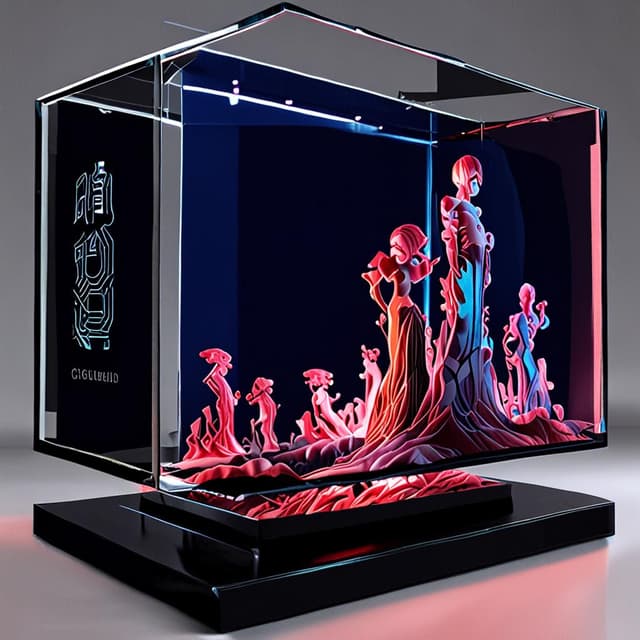
Holographic television, the ability to display three-dimensional images without the use of special glasses or headsets, has been a reality since the 1970s. This pioneering technology emerged decades earlier than in our timeline, driven by the need for innovative display methods as television became a ubiquitous part of daily life.
The foundations for holographic television were laid in the 1960s, as researchers around the world explored ways to create true three-dimensional moving images. Building on advancements in laser technology, optical holography, and computer graphics, several teams independently developed the first prototype holographic TV systems in the late 1960s.
The breakthrough came in 1972, when researchers at the University of Tokyo unveiled a working holographic television that could display simple monochrome images without any special viewing equipment. This was quickly followed by more advanced color systems from labs in West Germany, France, and the United States. These early holographic televisions relied on complex arrays of mirrors, lenses, and specialized cameras to capture and project the 3D images.
While crude by today's standards, with limited resolution, color fidelity, and viewing angles, these pioneering holographic TV sets sparked intense public fascination. They offered viewers an unprecedented sense of depth and realism compared to the flat images of traditional CRT and early LCD televisions.
Recognizing the commercial potential of holographic television, electronics manufacturers rushed to bring the technology to market in the 1970s and 80s. Sony, Panasonic, Mitsubishi, and other major brands introduced consumer-oriented holographic TV sets, initially at very high prices but gradually becoming more affordable.
Holographic television faced significant technical hurdles in its early years. The complex optical systems required careful alignment and were sensitive to vibration, and the low resolutions and limited color palettes were often criticized. Yet the novelty and sense of wonder the technology evoked made it a status symbol in many households.
As holographic display technology steadily improved, it began to seriously challenge the dominance of conventional 2D television. Broadcasters adapted, investing in holographic cameras and production equipment. New television genres and programming formats emerged to take advantage of the medium's unique capabilities, from live 3D sports broadcasts to immersive holographic dramas.
The rise of holographic television had a profound impact on media, entertainment, and culture. Viewers were captivated by the ability to see moving, three-dimensional images without the need for cumbersome eyewear. Holographic TV sets became a common sight in homes, offices, and public spaces, transforming how people consumed and interacted with visual media.
The new technology disrupted traditional television, forcing networks, advertisers, and content creators to rethink their strategies. Holographic displays opened up new creative possibilities, but also presented challenges around camera placement, lighting, and visual effects. Debates raged over the artistic merits and authenticity of holographic content versus conventional 2D television.
Holographic television also had broader societal implications. The ability to project hyper-realistic 3D images into domestic spaces raised concerns about privacy, as well as the potential for manipulation and deception. Regulators struggled to keep pace with the rapid technological change, leading to ongoing legal and ethical debates.
While holographic television technology has continued to evolve, with higher resolutions, improved color fidelity, and wider viewing angles, it has not completely supplanted traditional 2D screens. Conventional flat-panel televisions remain popular, especially for smaller personal displays, due to their lower cost and simpler implementation.
However, holographic television has carved out a significant and enduring niche. Large public displays, immersive entertainment venues, and high-end home theaters increasingly feature holographic capabilities. The technology is also finding applications in fields like telemedicine, telepresence, and virtual reality, blurring the lines between television, communication, and simulation.
As research continues, the future of holographic television remains promising but uncertain. Competing display technologies, the continued refinement of 3D capture and projection methods, and the development of new interactive features may shape how holographic media is produced and consumed in the decades to come. One thing is clear: the revolutionary potential of holographic television will continue to captivate and challenge both the media industry and society at large.
